PADI Dry Suit Diver
DRY SUIT DIVER
Stay Warm. Stay Dry. Dive All Year.
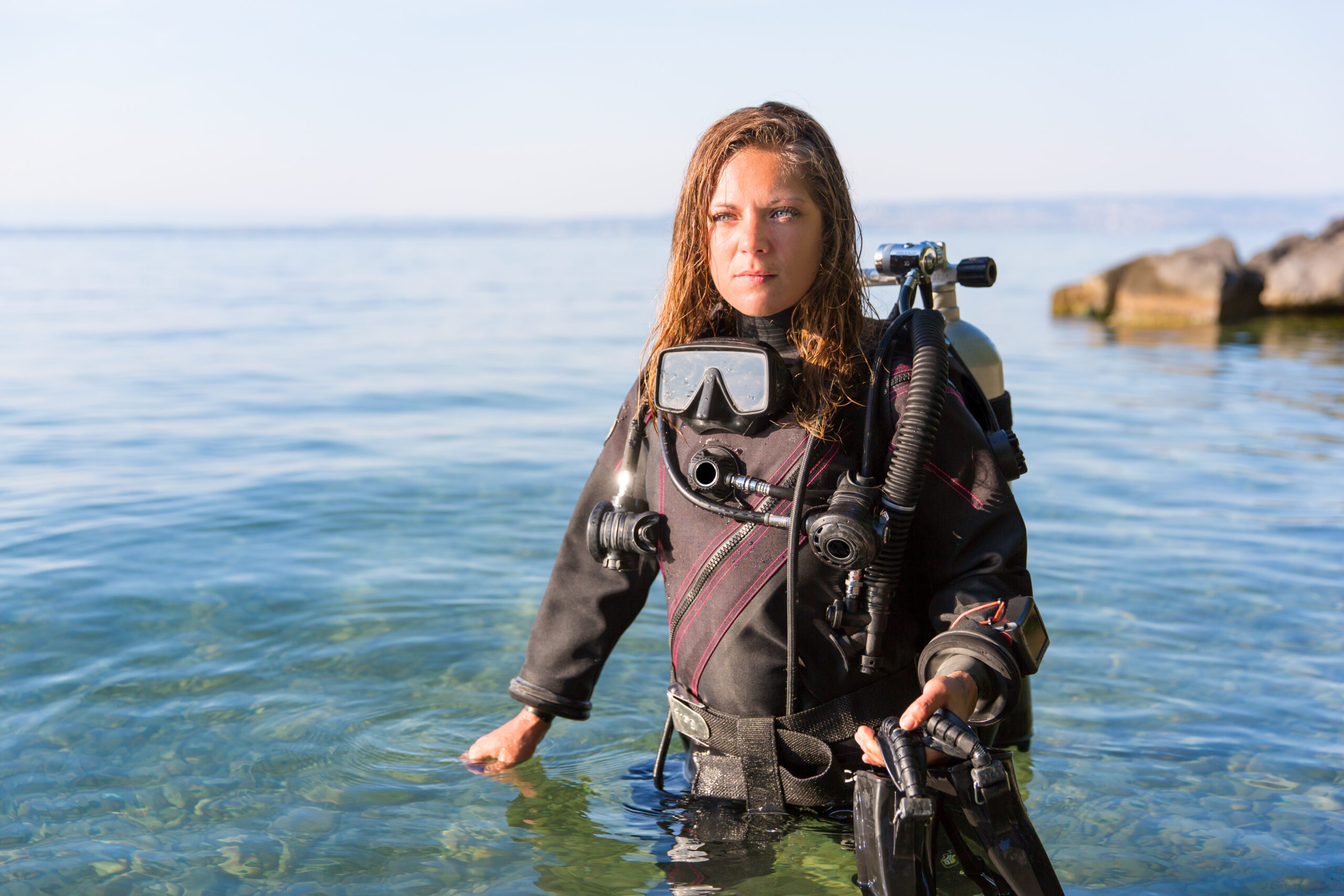
Don't let colder water bring your diving adventures to an end. The PADI Dry Suit Diver Specialty teaches you how to dive comfortably and confidently in a dry suit, opening up opportunities to explore UK waters and cooler dive destinations around the world.
Diving in a dry suit is different from diving in a wetsuit. You'll learn how to use the suit correctly, control your buoyancy and deal with the additional considerations that come with keeping yourself warm and dry underwater.
We'll first develop your skills in a controlled environment before heading into open water for two training dives, giving you the knowledge, practice and confidence to enjoy dry-suit diving safely.
WHAT'S INCLUDED IN YOUR DRY SUIT DIVER COURSE?
PADI Dry Suit Diver eLearning
Confined-water training session
Two open-water training dives
Learn correct dry-suit buoyancy and weighting
Practise important dry-suit emergency procedures
Learn about different dry suits, their care and maintenance
Training with an experienced PADI Dry Suit Specialty Instructor
Full scuba equipment provided
PADI Dry Suit Diver certification on successful completion
WHAT HAPPENS DURING YOUR COURSE?
Your course begins with PADI Dry Suit Diver eLearning, which introduces you to dry-suit diving before your practical training begins.
You'll learn how dry suits work, the different types available, how to choose appropriate undergarments, how to care for your suit and the important differences between diving wet and diving dry.
Then it's time to put one on.
Your confined-water session gives you the opportunity to become familiar with the dry suit and practise the specialist techniques you'll need before heading into open water.
You'll learn how to correctly put on and remove the suit, establish appropriate weighting and develop your buoyancy control while managing the air inside your dry suit.
Once you're comfortable, you'll complete two open-water dives, putting the skills you've learned into practice in a real diving environment.
By the end of the course, you'll have a much better understanding of how your dry suit behaves underwater and the confidence to start enjoying a much wider range of diving conditions.
WHY LEARN TO DIVE IN A DRY SUIT?
For divers in the UK, a dry suit can completely change what's possible.
Rather than waiting for warmer weather, the right exposure protection allows you to dive comfortably throughout much more of the year.
Being able to dive in cooler water also opens the door to some fantastic diving – from UK wrecks and inland sites to cold-water destinations around the world.
A dry suit keeps the water away from your body, while appropriate undergarments provide the insulation needed to keep you warm.
But using one properly requires additional skills.
Air moves inside the suit as you change position and depth, affecting both your buoyancy and trim. Learning how to manage that air correctly makes dry-suit diving far more comfortable, controlled and enjoyable.
Questions You May Have
DO I NEED TO BE A CERTIFIED DIVER?
Yes. You need to be a PADI (Junior) Open Water Diver or hold a qualifying certification from another recognised training organisation.
Dry-suit training can also be incorporated into qualifying PADI Open Water Diver training when appropriate.
HOW OLD DO I NEED TO BE?
The minimum age for the PADI Dry Suit Diver Specialty is 10 years old.
Junior divers remain subject to the normal PADI age-related depth and supervision requirements.
HOW MANY DIVES ARE INCLUDED?
The PADI Dry Suit Diver course includes one confined-water training dive and two open-water dives.
The confined-water session allows you to develop the specialist skills before applying them during your open-water dives.
WHAT WILL I LEARN?
You'll learn how to use a dry suit correctly and control your buoyancy while wearing one.
Training includes areas such as:
Putting on and removing your dry suit
Correct weighting
Buoyancy and trim
Managing air within the suit
Dry-suit emergency procedures
Dry-suit care and maintenance
You'll then apply these skills during your two open-water dives.
WHY DO I NEED A CONFINED-WATER SESSION FIRST?
A dry suit changes the way you manage buoyancy underwater, so it's important to become familiar with how it behaves before heading into open water.
The confined-water session gives you time to practise in a controlled environment and become comfortable with the suit before completing your open-water dives.
WILL A DRY SUIT KEEP ME COMPLETELY WARM?
A dry suit is designed to keep you dry, while the undergarments worn underneath provide thermal insulation.
Choosing appropriate undergarments for the water temperature is therefore an important part of comfortable dry-suit diving.
IS DRY-SUIT BUOYANCY DIFFERENT FROM DIVING IN A WETSUIT?
Yes.
Unlike a wetsuit, a dry suit contains air. As you descend and ascend, that air changes volume and can move around inside the suit.
Learning how to manage this effectively is one of the main skills you'll develop during the course.
WHAT HAPPENS IF AIR MOVES TOWARDS MY FEET?
This is one of the situations you'll learn how to manage during your training.
Understanding body position, buoyancy and how to recover from situations involving air movement within the suit is an important part of becoming a confident dry-suit diver.
DO I NEED TO OWN A DRY SUIT?
No. You don't need to own your own diving equipment to complete your training.
Full scuba equipment is provided as part of your Scuba Academy course.
If you already own a dry suit, speak to us about using it for your training. Learning in the equipment you'll continue diving with can be particularly useful.
CAN I USE A DRY SUIT ON MY OPEN WATER COURSE?
Yes. PADI allows dry-suit training to be incorporated into Open Water Diver training where appropriate.
If you're planning to do most of your future diving in the UK, learning to use a dry suit from the beginning can be a very useful option.
Talk to us before your course and we'll explain what's involved.
CAN THIS COUNT TOWARDS MY ADVANCED OPEN WATER COURSE?
Yes. The first open-water dive of the PADI Dry Suit Diver Specialty can potentially count as a Dry Suit Adventure Dive towards PADI Advanced Open Water Diver when the relevant requirements are met.
Likewise, if you've already completed a qualifying Dry Suit Adventure Dive during Advanced Open Water, it may be credited towards this specialty.
WHAT CAN I DO AFTER THE COURSE?
Once you're comfortable diving dry, you'll have access to a much wider range of diving opportunities.
You could continue developing your skills with specialties such as Deep Diver, Wreck Diver, Peak Performance Buoyancy or Underwater Navigation, or simply start putting your new dry-suit skills to use exploring more UK dive sites.
DRY SUIT DIVER HIGHLIGHTS
Ready to extend your diving season?
Learning to dive in a dry suit opens up a whole new range of underwater adventures – particularly here in the UK.
We'll help you develop the skills and confidence to get comfortable diving dry and make the most of your diving throughout the year.