PADI Rescue Diver
Rescue Diver
Become a Safer Diver. A Better Buddy. A More Confident You.
The PADI Rescue Diver course changes the way you think about diving. Instead of concentrating only on yourself, you'll learn to become more aware of the divers around you, recognise potential problems and respond confidently when someone needs help.
You'll develop practical rescue and problem-solving skills through realistic exercises and scenarios, learning how to manage situations both at the surface and underwater.
Challenging, practical and incredibly rewarding, Rescue Diver is often described by divers as one of the best courses they've ever completed.
WHAT'S INCLUDED IN YOUR RESCUE DIVER COURSE?
PADI Rescue Diver eLearning
Review and practise important self-rescue skills
Learn to recognise and respond to stressed and distressed divers
Develop emergency management and problem-solving skills
Full scuba equipment provided
Training and guidance from experienced PADI Instructors
PADI Rescue Diver certification on successful completion
WHAT HAPPENS DURING YOUR COURSE?
Your Rescue Diver course begins with PADI eLearning, where you'll develop your understanding of diver stress, emergency management, rescue procedures and how to recognise potential problems before they develop into something more serious.
Then the practical training begins.
You'll start by reviewing important self-rescue skills before progressing through the 10 PADI Rescue Exercises.
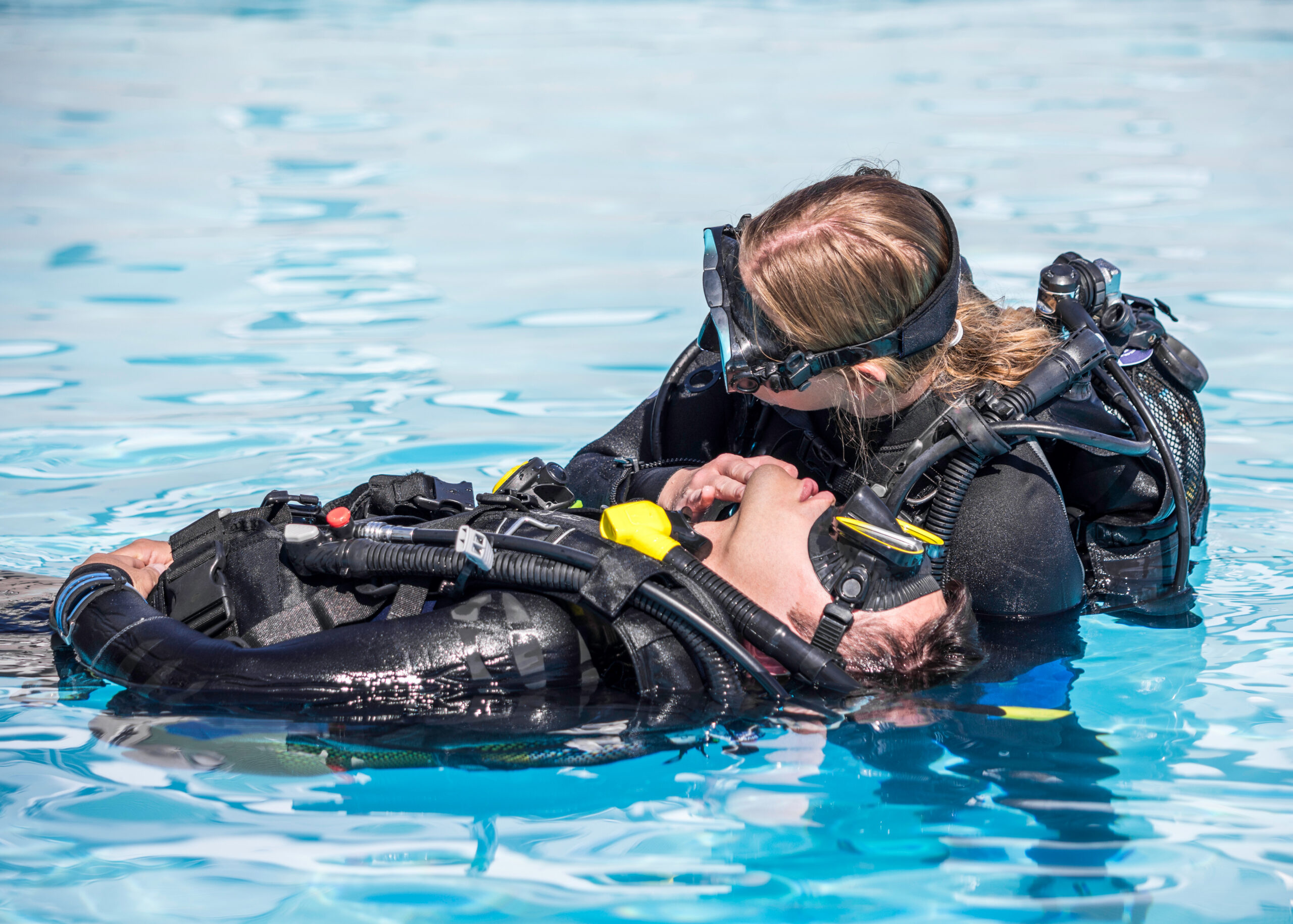
You'll learn how to recognise and assist tired, stressed and panicked divers, respond to problems underwater and at the surface, search for a missing diver and manage situations involving an unresponsive diver.
Once you've developed the individual skills, we'll bring everything together in two rescue scenarios.
You won't simply be told exactly what to do. You'll need to assess what's happening, decide how best to respond and put your training into practice.
That's where Rescue Diver really starts to change the way you dive.
LEARN TO THINK LIKE A RESCUE DIVER
Rescue Diver isn't simply about learning how to respond when something goes wrong.
A big part of becoming a Rescue Diver is learning how to recognise problems before they become emergencies.
You'll become more aware of what's happening around you – noticing signs of stress, thinking about potential risks and considering how you could respond if a situation changed.
You'll also learn an important principle of rescue: your own safety comes first. Good rescuers assess the situation, use appropriate equipment and assistance, and avoid unnecessarily putting themselves at risk.
By the end of the course, you'll find yourself looking beyond your own dive and becoming a more aware, capable and dependable buddy.
Questions You May Have
IS THE RESCUE DIVER COURSE DIFFICULT?
Rescue Diver is designed to challenge you.
You'll need to think, solve problems and sometimes manage several things at once. Some of the exercises can also be physically demanding.
But you're not expected to arrive already knowing how to perform a rescue. We'll develop the individual skills progressively before bringing them together in realistic scenarios.
It's challenging – but that's also what makes it so rewarding.
WHAT WILL I LEARN?
The course covers a wide range of rescue and emergency-management skills.
You'll learn about self-rescue, recognising diver stress, assisting tired and panicked divers, responding to problems underwater, searching for missing divers and helping unresponsive divers both underwater and at the surface.
You'll also learn how to assess an emergency and decide how best to use the people, equipment and resources available to you.
HOW MANY RESCUE EXERCISES ARE THERE?
There are 10 PADI Rescue Exercises.
These develop individual rescue techniques before you put your skills and knowledge together during the two final rescue scenarios.
WHAT ARE THE RESCUE SCENARIOS?
After completing the individual exercises, you'll participate in two open-water rescue scenarios.
These are designed to make you think rather than simply follow a sequence of instructions.
You'll assess the situation, decide what needs to happen and use the skills you've developed throughout the course to manage the emergency.
DO I NEED FIRST AID AND CPR TRAINING?
Yes.
To become a PADI Rescue Diver, you must have completed CPR and First Aid training within the previous 24 months.
PADI Emergency First Response Primary & Secondary Care meets this requirement and can be completed alongside your Rescue Diver training if you don't already hold a suitable current qualification.
DO I NEED TO BE AN ADVANCED OPEN WATER DIVER?
Not necessarily.
The minimum PADI prerequisite is PADI (Junior) Adventure Diver with the Underwater Navigation Adventure Dive completed, or a qualifying certification.
A PADI Advanced Open Water Diver already meets this diving prerequisite.
DO I NEED TO BE REALLY FIT?
You don't need to be an athlete, but Rescue Diver does involve physical activity.
You'll practise techniques for assisting and towing divers and responding to realistic rescue situations.
An important part of the training is also learning to work intelligently – using appropriate techniques, equipment and assistance rather than relying purely on physical strength.
DO I HAVE TO BE A STRONG DIVER?
You should be comfortable with the fundamental skills from your previous diver training.
Rescue will develop your awareness and abilities considerably, but good control of your own diving makes it much easier to concentrate on helping somebody else.
If you've been out of the water for a while, talk to us about whether a PADI ReActivate session before Rescue would be beneficial.
WHAT IS AN EMERGENCY ASSISTANCE PLAN?
As part of the course, you'll prepare an Emergency Assistance Plan for a dive site.
This gets you thinking beyond the immediate rescue – considering emergency contacts, available resources, local procedures and how professional emergency assistance would be activated.
CAN JUNIOR DIVERS BECOME RESCUE DIVERS?
Yes.
The minimum age is 12 years old. Divers aged 12–14 who meet the requirements earn the PADI Junior Rescue Diver certification.
At age 15, they are eligible for the standard Rescue Diver certification.
WHAT COMES AFTER RESCUE DIVER?
Rescue Diver is an important milestone for any recreational diver and is also a prerequisite on the pathway towards becoming a PADI Divemaster.
For recreational divers, you can continue developing your experience through PADI Specialty courses and work towards the prestigious PADI Master Scuba Diver rating.
RESCUE DIVER HIGHLIGHTS
Ready to take your diving to the next level?
Rescue Diver is about much more than responding to emergencies. It's about developing the awareness, confidence and judgement that makes you a better diver and a better buddy.
If you're ready for a challenge, we'll guide you every step of the way.