PADI Sidemount Diver
SIDEMOUNT DIVER
Streamlined. Balanced. A Different Way to Dive.
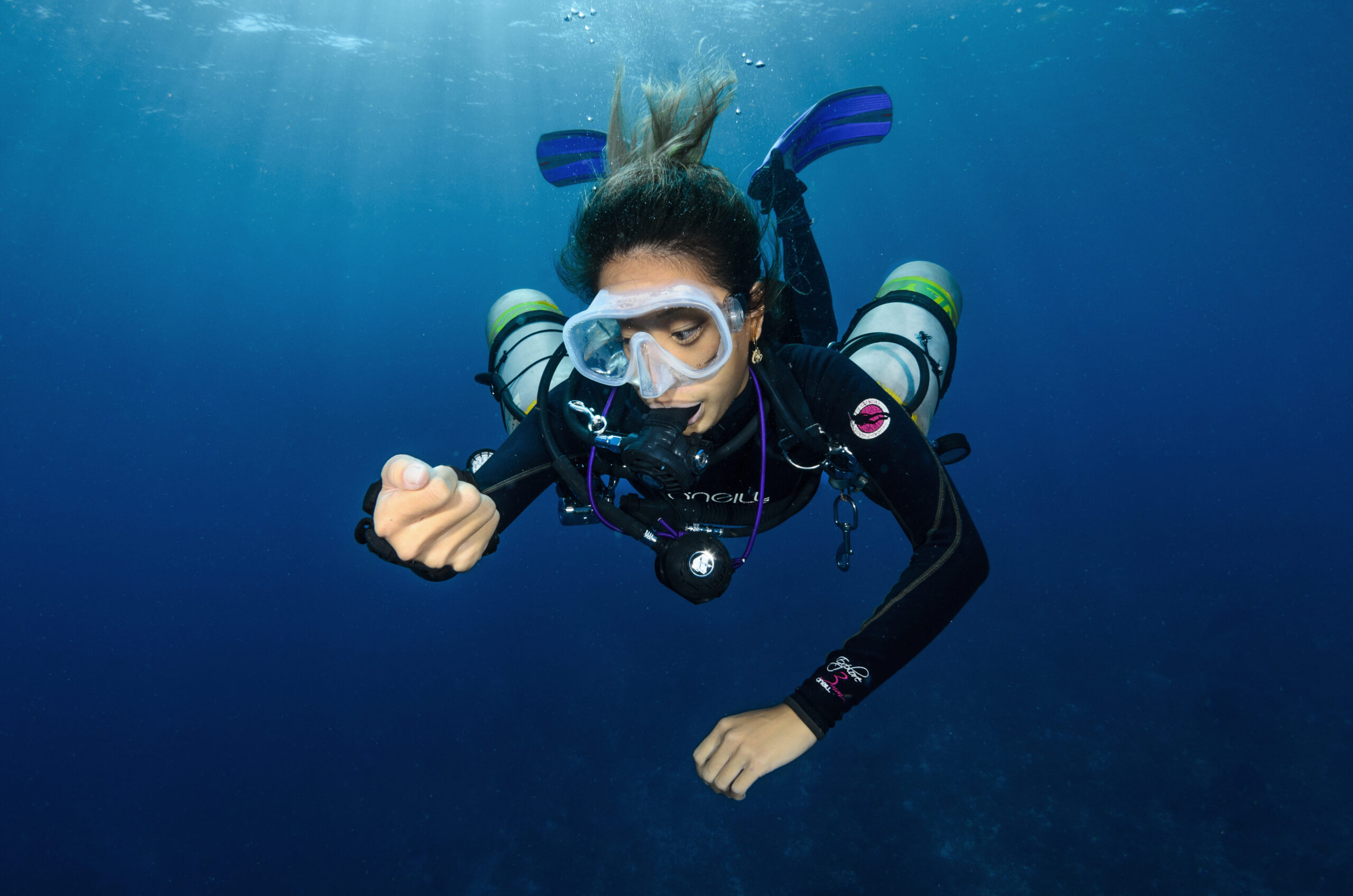
Discover a completely different way to configure your scuba equipment with the PADI Sidemount Diver Specialty. Instead of carrying a cylinder on your back, sidemount places your cylinders alongside your body, creating a streamlined and flexible diving configuration.
You'll learn how to correctly set up and adjust your sidemount equipment, attach and remove cylinders, manage your gas supply and develop the buoyancy and trim needed to dive comfortably in this configuration.
With confined-water training followed by three open-water dives, you'll progressively develop the skills and confidence needed to enjoy sidemount diving and discover why so many divers love this alternative way to dive.
WHAT'S INCLUDED IN YOUR SIDEMOUNT DIVER COURSE?
PADI Sidemount Diver eLearning
Confined-water training session
Three open-water training dives
Learn how to correctly configure sidemount equipment
Practise attaching, removing and managing cylinders
Develop excellent buoyancy, trim and streamlining
Learn effective gas-management procedures
Practise sidemount-specific problem-management skills
Training with an experienced PADI Sidemount Specialty Instructor
Full scuba and sidemount equipment provided
PADI Sidemount Diver certification on successful completion
WHAT HAPPENS DURING YOUR COURSE?
Your course begins with PADI Sidemount Diver eLearning, introducing you to the equipment, techniques and procedures involved in recreational sidemount diving.
Then you'll move into your confined-water training, where we'll help you correctly configure and adjust your sidemount equipment to suit you.
Equipment setup is particularly important with sidemount. Small adjustments to cylinder position, attachment points and weighting can make a significant difference to your comfort, balance and trim underwater.
You'll practise attaching and removing cylinders, entering the water with your equipment, managing your regulators and gas supply, establishing neutral buoyancy and developing a streamlined position.
Once you're comfortable with the configuration, you'll complete three open-water training dives.
Across these dives, you'll put everything together and develop the skills needed to manage your cylinders, gas and equipment confidently in a real diving environment.
WHY DIVE SIDEMOUNT?
Sidemount was originally developed for environments where carrying cylinders on the back wasn't always practical, but its advantages have made it increasingly popular with recreational divers too.
With the cylinders positioned alongside your body, a properly configured sidemount system can provide excellent balance, trim and streamlining underwater.
It also gives you immediate access to your cylinder valves and regulators, making it easy to see and manage your equipment.
Another major benefit is flexibility.
Rather than walking around with heavy cylinders attached to your back, cylinders can often be carried separately and attached in the water, which some divers find considerably more comfortable.
But good sidemount diving isn't simply about moving the cylinders from your back to your sides.
Correct configuration is everything – and that's exactly what this course teaches you.
Questions You May Have
WHAT IS SIDEMOUNT DIVING?
Sidemount is a scuba configuration where cylinders are positioned alongside the diver's body rather than mounted on the back.
The cylinders are individually attached to the sidemount harness and can be removed or repositioned when necessary.
A properly configured system can provide excellent streamlining, balance and flexibility underwater.
HOW MANY DIVES ARE INCLUDED?
The PADI Sidemount Diver Specialty includes one confined-water dive and three open-water training dives.
The confined-water training gives you time to configure your equipment and develop the fundamental sidemount skills before putting them into practice in open water.
WHAT WILL I LEARN?
You'll develop knowledge and practical skills including:
Sidemount equipment configuration
Cylinder attachment and removal
Weighting and equipment adjustment
Buoyancy and trim
Streamlining
Gas management
Regulator switching
Cylinder and valve management
Problem-management procedures
The aim is to make managing your sidemount system feel comfortable, organised and natural.
DO I USE ONE CYLINDER OR TWO?
Recreational sidemount can be conducted using appropriate sidemount configurations, but the course develops the skills needed to manage the equipment and gas correctly.
For most divers, one of the attractions of sidemount is learning to comfortably manage two independently mounted cylinders.
Your instructor will explain the configuration being used during your training and how to manage your gas appropriately.
HOW DO I MANAGE THE GAS IN TWO CYLINDERS?
Gas management is an important part of sidemount training.
Because your cylinders are independent, you'll learn to monitor both gas supplies and switch regulators appropriately to manage the gas in each cylinder.
Rather than simply swapping regulators randomly, you'll learn a systematic approach that keeps your gas supply balanced and ensures you remain aware of what's available.
IS SIDEMOUNT MORE COMFORTABLE THAN A NORMAL BCD?
For some divers, yes.
Because the cylinders are carried alongside the body rather than directly on the back, sidemount can reduce the amount of weight you need to carry on your back while moving around on land.
Depending on the dive site, cylinders may also be attached and removed in the water.
Underwater, a well-adjusted sidemount system can feel extremely balanced and streamlined.
IS SIDEMOUNT ONLY FOR CAVE OR TECHNICAL DIVERS?
No.
Although sidemount has strong roots in cave and technical diving, PADI Sidemount Diver is a recreational specialty and can be enjoyed in normal open-water diving environments.
Many recreational divers choose it simply because they enjoy the equipment configuration, flexibility and underwater trim.
DOES THIS COURSE QUALIFY ME FOR CAVE DIVING?
No.
The PADI Sidemount Diver Specialty teaches you how to use a sidemount equipment configuration.
It does not qualify you to enter caves, restricted overhead environments or conduct technical dives.
Those environments require separate specialist training and experience.
WHY IS EQUIPMENT CONFIGURATION SO IMPORTANT?
Sidemount equipment needs to be adjusted specifically for the diver.
Cylinder attachment points, harness adjustment, weighting and equipment positioning all influence how the cylinders sit alongside your body.
A well-configured system can feel balanced and streamlined.
A poorly configured one can be uncomfortable and difficult to manage.
That's why we spend time getting the equipment set up properly rather than simply putting it on and jumping in.
DO I NEED TO BE ADVANCED OPEN WATER CERTIFIED?
No.
You need to be a PADI Open Water Diver or hold a qualifying certification from another recognised training organisation.
You don't need to hold Advanced Open Water Diver before starting the recreational Sidemount Diver Specialty.
HOW OLD DO I NEED TO BE?
The minimum age for the PADI Sidemount Diver Specialty is 15 years old.
WHAT CAN I DO AFTER SIDEMOUNT DIVER?
Once you're comfortable diving sidemount, you can use the configuration for appropriate recreational dives within the limits of your existing training.
You can also continue developing your diving through specialties such as Deep Diver, Wreck Diver, Enriched Air Diver and Peak Performance Buoyancy.
SIDEMOUNT DIVER HIGHLIGHTS
Ready to try a different way to dive?
Sidemount offers a completely different equipment configuration and, when properly set up, can provide excellent balance, streamlining and flexibility underwater.
We'll take you from initial equipment setup through confined-water practice and into open water, helping you develop a sidemount configuration and technique that works for you.