EFR PRIMARY & SECONDARY CARE
EFR PRIMARY & SECONDARY CARE
Learn the Skills to Help When It Matters Most.
Emergencies can happen anywhere — at home, at work, while travelling or out diving.
The Emergency First Response (EFR) Primary & Secondary Care course teaches you practical CPR and first aid skills, giving you the knowledge and confidence to respond when someone needs help.
You'll learn how to assess an emergency, perform CPR, manage serious bleeding and shock, respond to choking and provide first aid for a range of injuries and illnesses.
At Scuba Academy, we also include the optional EFR AED and emergency oxygen skills, giving you an even broader range of practical emergency response training.
You don't need to be a diver and no previous first aid experience is required.
WHAT'S INCLUDED IN YOUR EFR PRIMARY & SECONDARY CARE COURSE?
Emergency First Response Primary Care (CPR) training
Emergency First Response Secondary Care (First Aid) training
Knowledge development and practical skills
CPR and primary assessment
Serious bleeding, shock and choking management
Injury and illness assessment
Bandaging and splinting
Automated External Defibrillator (AED) training
Emergency oxygen training
Realistic emergency scenarios
Training with an experienced Emergency First Response Instructor
All practical training equipment provided
EFR Primary & Secondary Care certification on successful completion
WHAT HAPPENS DURING YOUR COURSE?
Your EFR course combines knowledge development, hands-on practical training and realistic emergency scenarios.
You'll start by learning how to assess an emergency scene, protect yourself and the casualty, activate emergency medical services and decide what action needs to be taken.
During Primary Care, you'll learn how to respond to potentially life-threatening emergencies. You'll practise primary assessment, CPR, serious bleeding management, shock management, choking response and spinal injury management.
Secondary Care develops your first aid skills for injuries and illnesses that aren't immediately life-threatening. You'll learn how to carry out injury and illness assessments and practise skills including bandaging and splinting.
At Scuba Academy, your training also includes the optional EFR AED and emergency oxygen skills. You'll practise incorporating an AED into a cardiac emergency response and learn how emergency oxygen can be provided when appropriate.
Once you've developed the individual skills, you'll bring everything together through realistic emergency scenarios.
EFR training is performance based, so the focus isn't simply on completing a set number of hours.
The aim is for you to leave knowing what to do and feeling confident enough to step forward and help.
SKILLS FOR DIVING – AND EVERYDAY LIFE
You don't need to be a diver to take Emergency First Response.
The CPR and first aid skills you learn can be useful at home, at work, while travelling, during sport or anywhere an emergency may occur.
For divers, EFR is also an important part of progressing towards PADI Rescue Diver, where current CPR and first aid training is required.
Including AED and emergency oxygen training gives our students an even broader range of practical emergency response skills.
For those wanting more comprehensive diving-specific oxygen training, you can continue with our PADI Emergency Oxygen Provider Specialty.
Questions You May Have
DO I NEED PREVIOUS FIRST AID EXPERIENCE?
No.
You don't need any previous CPR or first aid training.
You'll develop the knowledge and practical skills progressively with your instructor before bringing them together during emergency scenarios.
DO I NEED TO BE A DIVER?
No.
EFR is suitable for divers and non-divers, and there are no scuba certification prerequisites.
Parents, teachers, sports coaches, workplace staff and anyone who wants to develop practical CPR and first aid skills can take the course.
WHAT'S THE DIFFERENCE BETWEEN PRIMARY AND SECONDARY CARE?
Primary Care (CPR) focuses on potentially life-threatening emergencies where immediate action may be required.
You'll learn skills including CPR, serious bleeding management, shock management and responding to choking.
Secondary Care (First Aid) focuses on injuries and illnesses that aren't immediately life-threatening and includes injury and illness assessment, bandaging and splinting.
WILL I ACTUALLY PRACTISE CPR?
Yes.
EFR is a practical course.
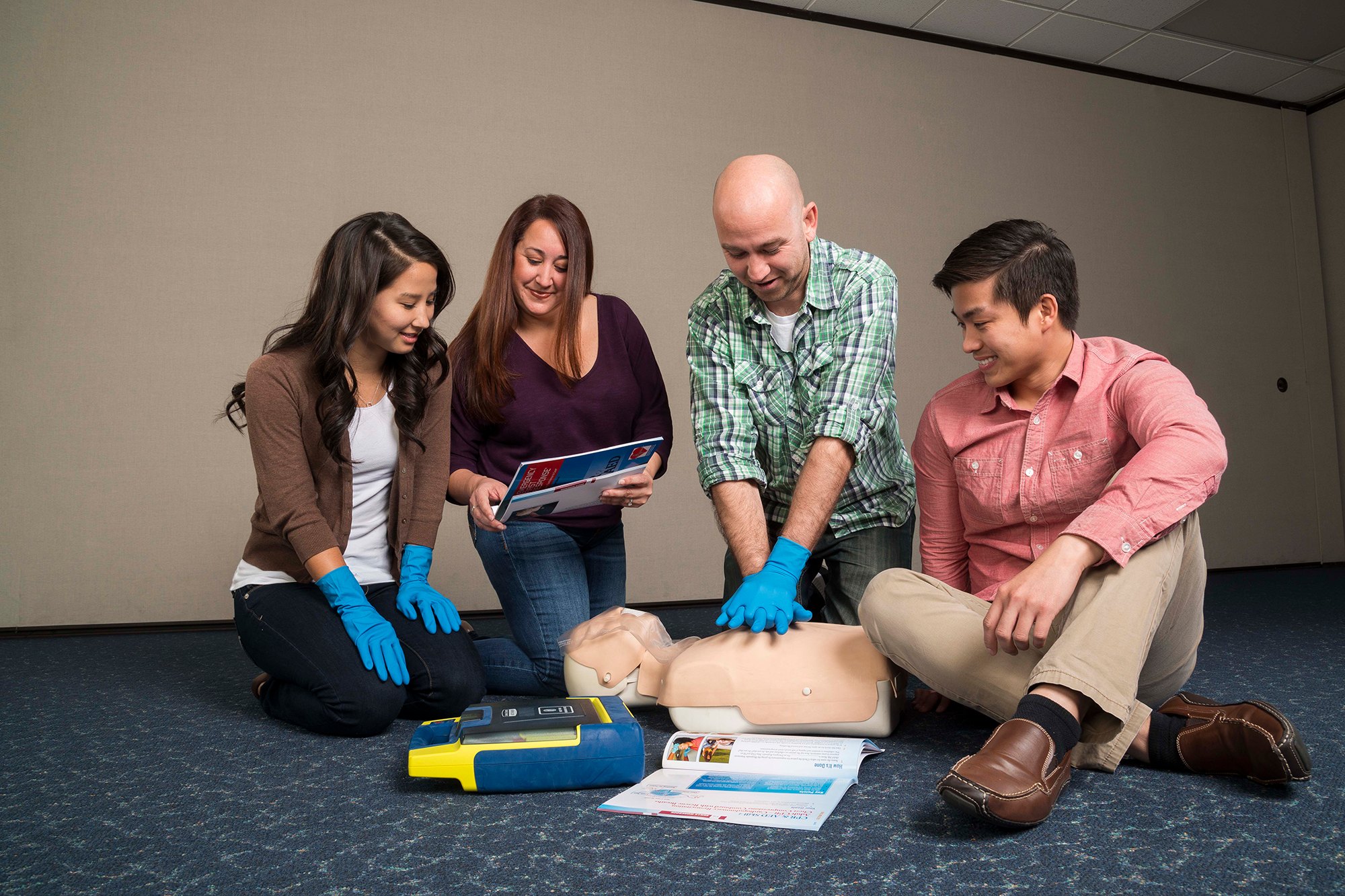
You'll practise CPR using training manikins and work through the skills with your instructor, giving you the opportunity to develop your technique and become comfortable with the emergency response process.
DOES THE COURSE INCLUDE AED TRAINING?
Yes.
At Scuba Academy, we include the optional EFR Automated External Defibrillator (AED) skill as part of your course.
You'll learn how an AED fits into the response to a cardiac emergency and practise incorporating it into CPR.
DOES THE COURSE INCLUDE EMERGENCY OXYGEN?
Yes.
We also include the optional EFR emergency oxygen skill.
You'll learn about providing emergency oxygen and gain practical experience using oxygen equipment.
For more comprehensive diving-specific oxygen training, we also offer the PADI Emergency Oxygen Provider Specialty.
DO I NEED EFR FOR PADI RESCUE DIVER?
PADI Rescue Diver requires qualifying CPR and first aid training completed within the previous 24 months.
EFR Primary & Secondary Care meets this training requirement, which is why many divers complete EFR immediately before their Rescue Diver course.
HOW LONG DOES THE COURSE TAKE?
EFR training is performance based rather than simply time based.
You'll complete the required knowledge development and demonstrate the practical skills required for certification.
The exact time can therefore vary depending on the group and how quickly everyone becomes comfortable with the skills.
IS EFR ONLY USEFUL FOR DIVING?
Not at all.
There's actually no diving involved in the EFR course.
The skills are designed for emergencies that can happen anywhere, making EFR valuable whether you're taking it for your diving education or simply want to be better prepared in everyday life.
IS EMERGENCY OXYGEN PROVIDER THE SAME COURSE?
No.
Your EFR course includes the optional emergency oxygen skill, but this doesn't give you the separate PADI Emergency Oxygen Provider Specialty certification.
Emergency Oxygen Provider provides more comprehensive training specifically focused on recognising potential diving-related injuries and illnesses and providing emergency oxygen.
EFR PRIMARY & SECONDARY CARE HIGHLIGHTS
BE READY TO HELP WHEN IT MATTERS
You may never need to perform CPR or provide emergency First Aid.
But if somebody suddenly needs help, having the knowledge and confidence to take action can make an enormous difference.
EFR Primary & Secondary Care gives you the opportunity to learn the skills, practise them properly and become more confident using them in a relaxed and supportive environment.
Whether you’re preparing for your PADI Rescue Diver course or simply want First Aid skills that could help a friend, colleague, family member or complete stranger, this is training that extends far beyond scuba diving.
Be prepared. Build confidence. Know how to help.